January 7, 2026 5 min read networks
Small Worlds at Dusk
Why network thinking still helps when the system is noisy, high-dimensional, and only partially observed.
I came into biology through physics and complex systems, so I still have a reflex to ask what is interacting with what, on which topology, and with what stability.
That reflex remains useful even when the system refuses to look like a clean graph.
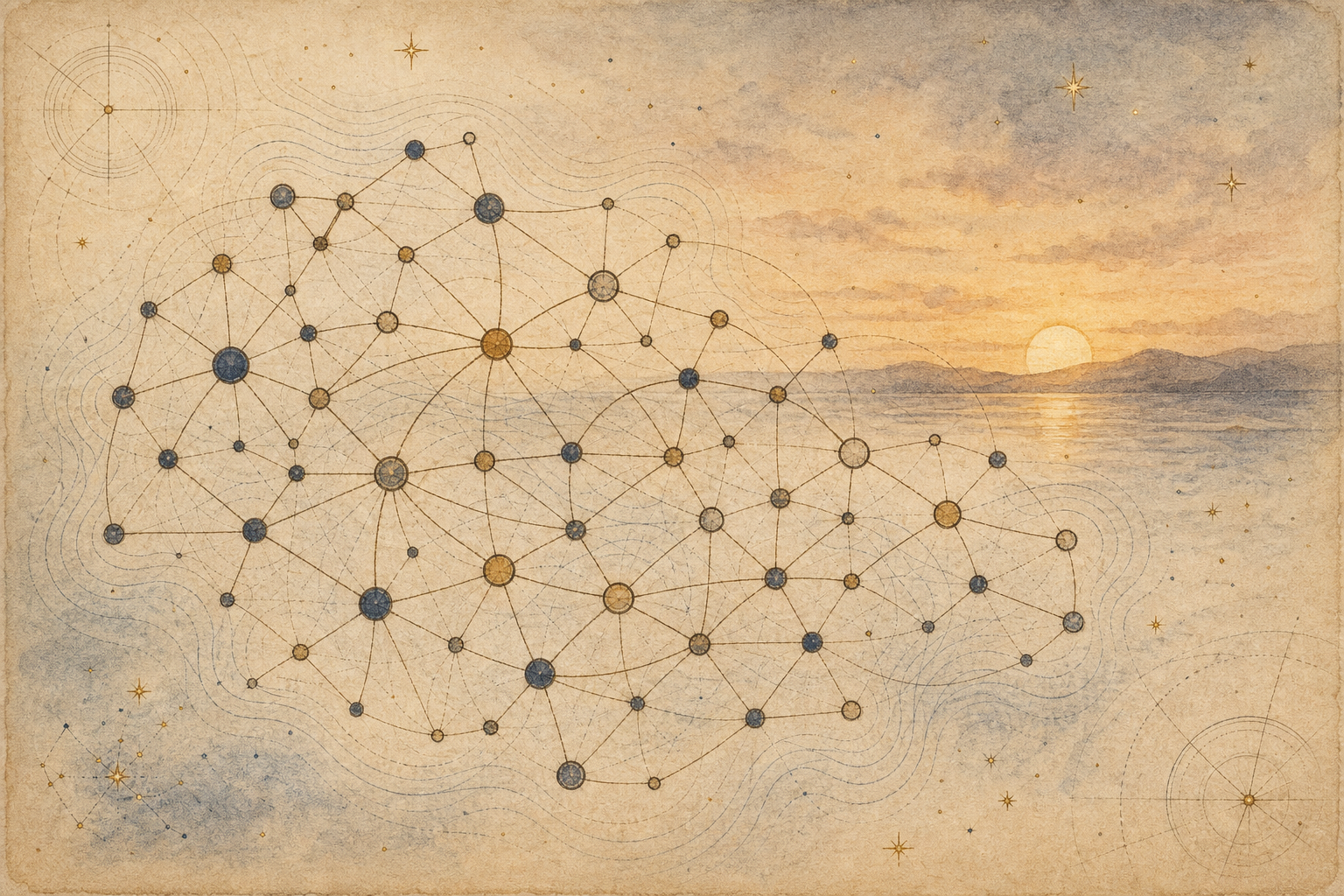
Structure appears at the edge of observation — enough coupling to reason, enough noise to stay honest.
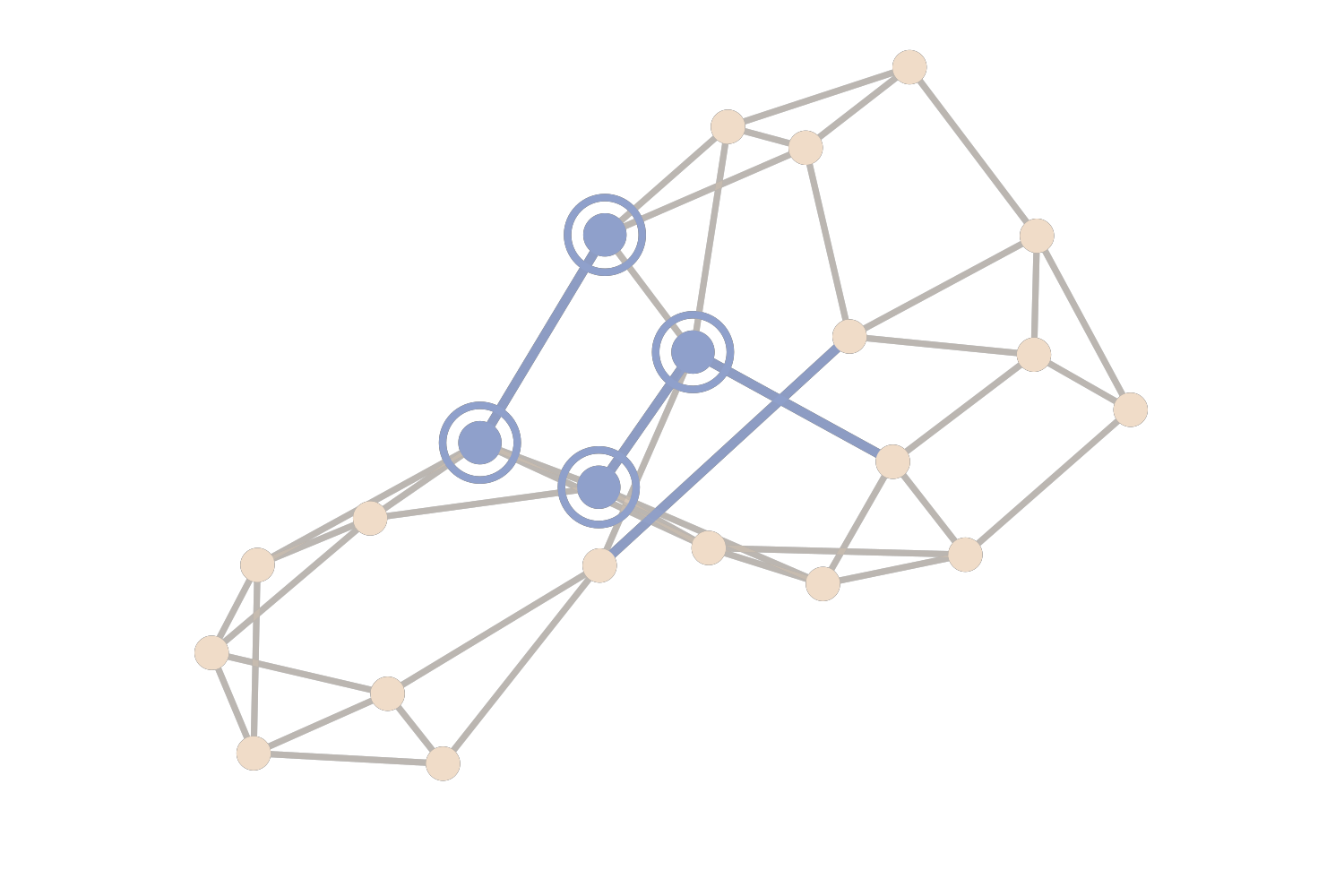
Biological systems are high-dimensional, contingent, and only partially observable. But the language of coupling, resilience, perturbation, and collective state still gives us traction. It helps bridge scales. It keeps us attentive to the fact that local changes can alter global behavior in ways that are not obvious from any single measurement.
The challenge is not to force every problem into a network formalism. It is to preserve the intuition that structure matters, that trajectories matter, and that robustness is often the real quantity of interest.
That is one thread connecting my older work in nonlinear dynamics to current work in genomics: the search for descriptions that are simple enough to reason with and rich enough to remain honest.